

Most product ideas begin with a gap someone noticed and a rough sense of how to close it. The instinct from there is to build: sketch the features, estimate the timeline, and start developing. The problem is that early assumptions about what users need and how they will behave are often wrong in ways that are impossible to see from the inside.
MVP development exists to surface those problems before they become expensive. It is the practice of building the smallest version of a product that delivers real value to users and generates real feedback for the team. Instead of spending months building on assumptions, start-ups release a focused product, learn from actual behavior, and use that information to decide what to build next.
Defining MVP beyond the buzzword
MVP stands for Minimum Viable Product. In practical terms, it is the simplest version of a product that delivers enough value for real users to find it useful, while generating enough signal for the team to learn from.
The word “minimum” tends to mislead. Many founders hear it and picture a rough, half-finished build. Others overcorrect and try to include everything. A well-executed MVP is neither. It is a focused product that does one thing well rather than several things adequately. The features left out are waiting for evidence that they are worth building.
A well-defined MVP includes a clearly identified user problem, the core functionality needed to address it, a usable and reliable experience, and a way to capture how people actually interact with it.
Why building everything at once tends to backfire
When founders are close to an idea, every planned feature feels important and every workflow feels essential. The result is often a long development cycle ending with a product built entirely on assumptions.
The issue is not that assumptions are always wrong. It is that they are untestable until real users get involved. A feature that seemed critical during planning can turn out to have little value in practice. By the time that becomes clear, the cost of changing direction is already significant.
We have seen this play out more than once. A team spends six months building a platform based on a detailed brief, launches, and discovers that the feature users engage with most was almost cut from scope. Starting smaller would have revealed that at a fraction of the cost.

What MVP Development is actually for
The short answer is that it reduces the cost of being wrong.
Every product team is making bets in the early stages. Are we solving the right problem? Will people pay for this? Which features actually matter? An MVP does not answer those questions through research or projections. It answers them through real user behavior, which is a fundamentally different category of information. Before validating whether users want a product, it is worth asking whether the product needs to be built at all, or whether an existing platform already solves the problem well enough to start.
This matters for three practical reasons.
- Faster validation: No survey or customer interview replicates the signal generated by a user integrating a live product into their daily workflow. Once a working product is in front of real users, the team can see where people engage, where they drop off, and what they return to.
- Better use of limited budget: Focusing on essential functionality means the budget remains available for the post-launch phase, when the team actually knows what needs to be built.
- Stronger investor conversations: A product with active users and early retention data makes a more compelling case than a roadmap built on projections. Demonstrated traction carries considerably more weight than a polished pitch deck.
MVP vs. Prototype vs. Proof of Concept
These terms are used interchangeably often enough to cause real confusion at the wrong moments. They address different questions at different stages.
A proof of concept tests whether something is technically possible. It is typically internal, often rough, and not intended for end users. A prototype explores how a product might look and behave. It tests design and user flows, often without working functionality behind it. An MVP is the first version of the product that real users interact with, built specifically to validate whether genuine demand exists.
Choosing the wrong tool at the wrong stage is expensive. A team that builds a full MVP when a prototype would have answered the question has over-invested. A team that stops at a prototype when they need market validation has under-invested.
| Proof of concept | Prototype | MVP | |
| Primary question | Can this be built? | How should it look and feel? | Do people actually want this? |
| Audience | Internal team | Stakeholders, early users | Real customers |
| Output | Technical validation | Clickable mockup or demo | Live, functional product |
How MVP Development typically works
Most MVP projects move through a recognizable sequence, even though no two products follow exactly the same path.
1. Define the problem narrowly: The strongest MVPs begin with a tightly scoped problem experienced by a specific audience. The more precise the problem, the easier it is to determine what belongs in the first release.
2. Identify only the essential features: When teams honestly ask what the smallest version of the product that still creates value looks like, the list is almost always shorter than expected. Discipline here is one of the most reliable indicators of a successful MVP.
3. Design for usability, not completeness: Users are more forgiving of missing features than of an experience that feels confusing or unreliable. A simple, consistent experience tends to outperform a feature-rich one that is difficult to navigate.
4. Build on a foundation that can change: MVP requirements shift after launch, often significantly. Many teams use frontend frameworks that allow interfaces and workflows to be adjusted without rebuilding underlying systems, keeping iteration costs manageable.
5. Launch and observe: Once live, the focus shifts from building to understanding. Where users engage, where they stop, what they return to. This is where the most useful and least expected product insights tend to surface.
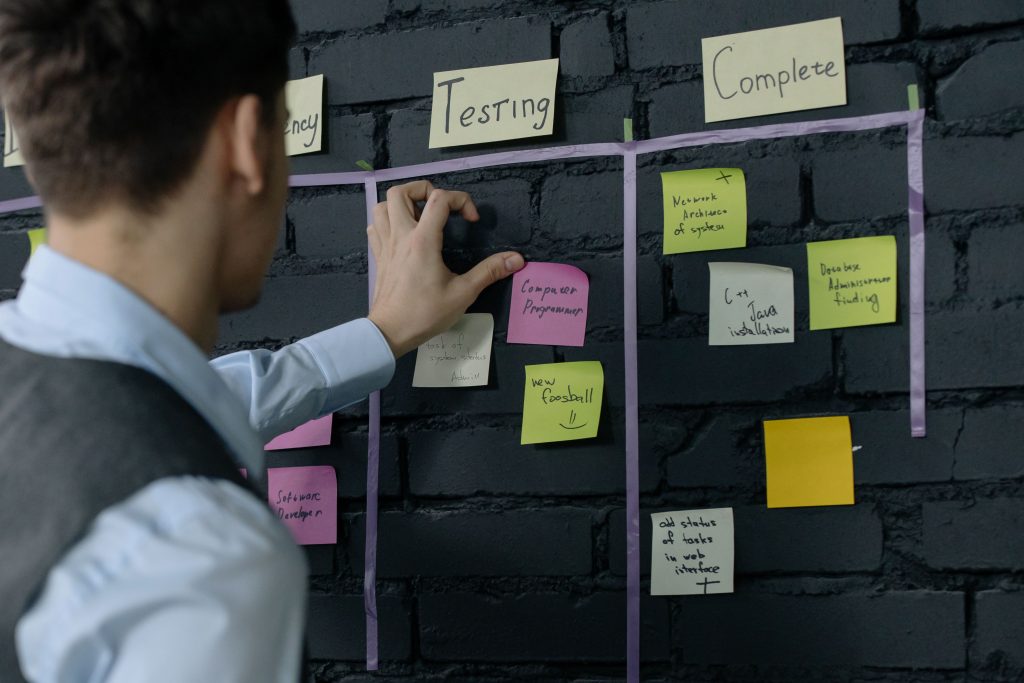
6. Iterate based on what actually happens: Features get expanded, simplified, or removed based on real usage. Over time, the product moves from
Mistakes That Derail MVP Projects
- Treating minimum as an excuse for low quality. A focused product still needs to be reliable. A confusing or unstable experience generates abandonment, not useful feedback.
- Adding scope because the product feels too small. The pressure to add features is constant. Each addition makes the product harder to evaluate and delays the point at which real learning begins.
- Waiting until everything feels ready. Every week spent refining assumptions is a week not spent learning from users.
- Building for everyone. A specific, clearly defined user generates more useful signal than a large, vague audience. Products aimed broadly during validation rarely gain meaningful traction.
- Trusting what users say over what they do. Interview feedback and actual in-product behavior frequently diverge. A feature users describe as essential but rarely use is telling the team something no interview would reveal.
How Long Does MVP Development Take?
There is no single answer. A straightforward internal tool can be ready in a matter of weeks. A SaaS platform with user authentication, subscription billing, and multiple distinct workflows will take considerably longer. Complexity, integration requirements, and the number of user flows all affect the timeline.
The more useful question is how to structure the investment across stages. MVP development is better understood as the first phase of a learning cycle than as a standalone project. The first release gets something into the hands of real users. What gets built next depends on what is learned.
Frequently Asked Questions
- What is an MVP in software development?
An MVP, or Minimum Viable Product, is the earliest version of a software product that delivers enough value for real users to find it useful and enough feedback for the team to make informed decisions about what to build next. It is not a rough prototype. It is a focused, functional product with deliberate limits on scope. - How much does MVP development cost?
- Cost depends on product complexity, the number of integrations required, and team size. Simple tools can be built at relatively low cost. More complex platforms with multiple user roles, payment systems, and third-party integrations require a larger investment. The more useful framing is how to structure the budget to support iteration after launch, not just delivery of the first version.
- How is an MVP different from a prototype?
A prototype tests design and user flows, often without working functionality. An MVP is a live, functional product that real users interact with. A prototype answers how the product should look and behave. An MVP answers whether people actually want it. - Why do start-ups use MVP development?
Because it reduces the cost of being wrong. Rather than investing heavily in a fully built product based on untested assumptions, start-ups use an MVP to validate demand, observe real behavior, and make better-informed decisions about where to invest next.
Build your MVP with the right team
At Web Experts Nepal, we work with start-ups and product teams at the stage where the idea is clear but the path forward is not. That usually means helping define what belongs in the first release, choosing a technical approach that supports rapid iteration, and making sure the product is built in a way that does not create problems six months later when priorities shift.
If you are working through an early product idea and want a practical conversation about how to approach it, we are happy to help and offer our many solutions to get you through the process.
Contact UsRelated resources.
How to Choose the Right eCommerce Platform for Your Business

How to Scale a WooCommerce Store Without Breaking Performance
Migrating From Wix or Squarespace to WordPress: A Practical Guide
Have an idea worth building?
Share your concept with us and we’ll help you shape the right approach.