
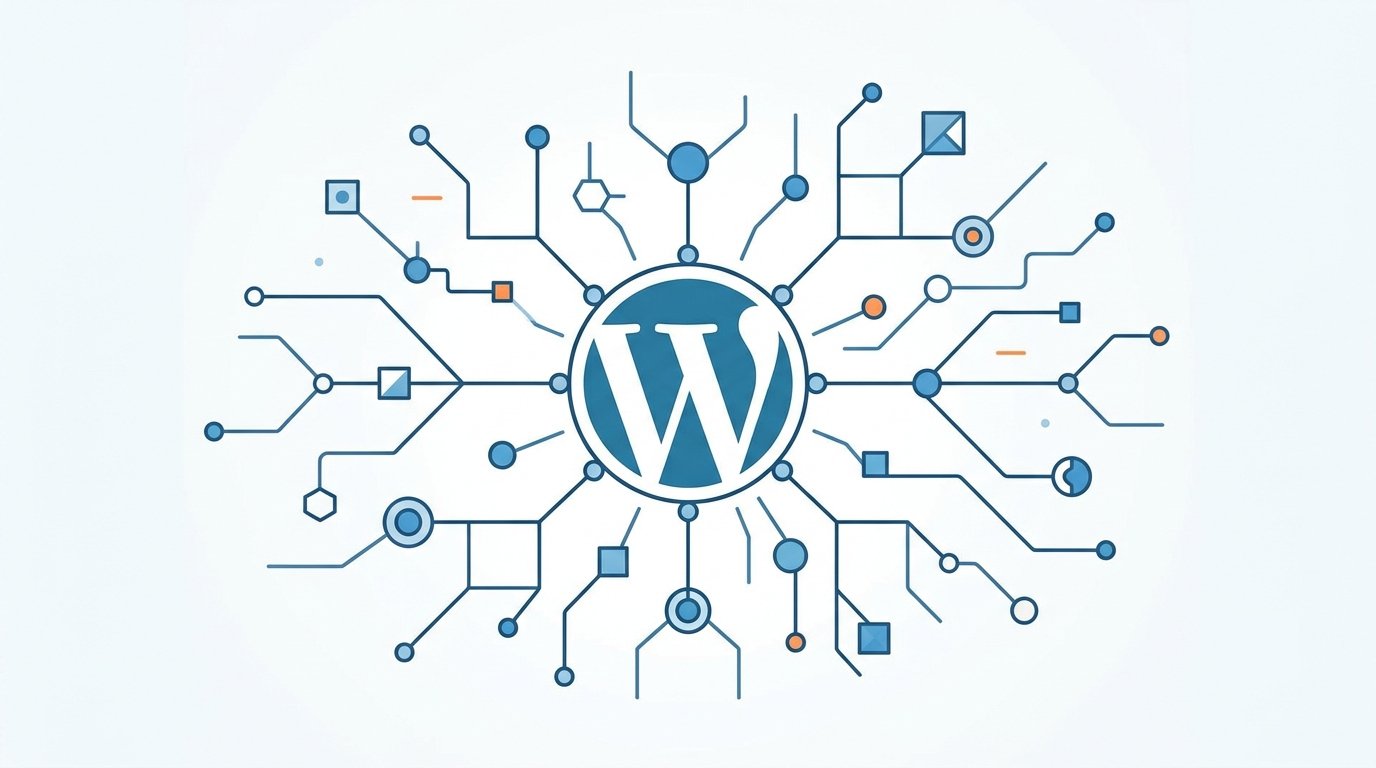
Choosing a platform for a new website has never involved more options. Website builders promise a quick launch, custom development offers total control, and a new contender seems to arrive every year claiming it will replace everything that came before. Despite that, one platform has held its position at the center of the web for over two decades: WordPress.
WordPress now runs more than 43% of all websites on the internet, roughly two-thirds of every site that uses a content management system at all. Organizations keep choosing it not because it was first to market, but because it balances five things every website project needs to get right: easy content management, cost control, room to grow, integration with other systems, and long-term ownership of the result.
That kind of longevity is unusual in technology. Most platforms that were popular twenty years ago are gone or irrelevant today, yet WordPress has not just survived, it has kept growing, and its user base now spans small businesses and local nonprofits through to universities, publishers, and multinational corporations.
What Makes WordPress Different From Off-the-Shelf and Custom Builds
Every organization has requirements that a generic template will not quite fit. A nonprofit might need membership management and event registration. A professional association might need gated resources for members and private workspaces for committees. A business might need lead capture tied directly into its CRM. For a long time, organizations had to pick between two imperfect options: an off-the-shelf platform that was easy to launch but hard to customize, or a fully custom build that offered flexibility at a much higher cost and a longer timeline.
WordPress sits between those two extremes. Its core software gives a project a solid starting point, while its open architecture allows real customization of functionality, workflow, and design. Rather than forcing an organization to change how it works to fit the software, WordPress can usually be shaped to fit the organization instead, and that flexibility carries forward well past launch day.
A regional nonprofit, for example, might launch with a simple donation page and a basic events calendar. Two years later, once membership grows, it might add a members-only portal, integrate a CRM for donor tracking, and layer in email marketing automation, all without tearing down the original site and starting fresh. That kind of incremental growth is harder to pull off on a platform that was either too simple to extend or too complex to justify at the outset. The strongest websites are rarely the ones that launch with every feature switched on; they are the ones built on a foundation that can absorb changes without a full rebuild.
Content Management Built for the People Who Run It, Not Just the People Who Launch It
A website project tends to get most of its attention in the weeks before launch, but what happens in the two years afterward usually matters more. Plenty of sites look sharp on day one and become difficult to maintain by year two: content goes stale, information becomes inconsistent across pages, and staff end up waiting on a developer to fix a typo. A site’s real value depends heavily on how easily the people running it day to day can keep it current.
WordPress began as a publishing tool, and that history still shows in its strengths. Non-technical staff can create pages, publish updates, manage media, and edit navigation without writing code. For an organization that regularly publishes news, updates its services, or promotes events, that kind of independence from developers often matters more than any feature on the launch-day checklist.
Open Source Means the Organization Keeps Control
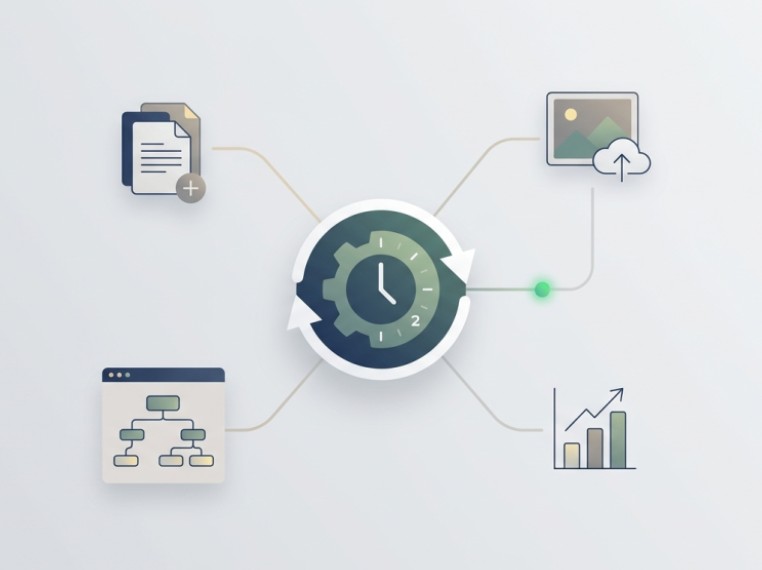
A website is rarely a one-time expense. Most organizations redesign every few years, but the content and data built up in between can represent a decade or more of institutional work, which is why WordPress’s open-source foundation matters. Proprietary platforms can tie an organization to a specific vendor, a specific hosting environment, or an ongoing subscription with terms that can change without notice. WordPress does not work that way: an organization can move hosts, switch development agencies, or extend functionality without asking anyone’s permission or waiting on someone else’s product roadmap.
For nonprofits and membership associations in particular, where budgets are tight and staff turnover is common, that independence is not a minor technical detail. It is often a real strategic advantage, and it is one of the main reasons organizations that value long-term control over their digital assets keep coming back to WordPress.
A Large, Mature Ecosystem of Tools and Specialists
Two decades of adoption have produced an enormous ecosystem around WordPress. Developers, agencies, and software companies have already solved most of the common problems a website will encounter, including search engine optimization, accessibility compliance, event and membership management, CRM and marketing automation integration, e-commerce, analytics and reporting, security hardening, and multilingual content. None of this removes the need for good strategy or thoughtful custom work. What it does is let a project team spend its budget solving the organization’s actual problems instead of rebuilding standard functionality that already exists and has been tested by millions of other users.
Performance and Security Depend on Implementation, Not the Platform
A common criticism of WordPress is that it runs slower or gets hacked more often than other platforms. In practice, this has much more to do with how a site is built and maintained than with WordPress itself. A poorly configured site on any platform will perform badly, while a well-built WordPress site, with proper hosting, a CDN, optimized images, and regular updates, can hold up well against sites built on newer, more fashionable stacks. Nevertheless, even well-built sites can accumulate technical debt over time through deferred updates, plugin conflicts, and infrastructure decisions that gradually erode that initial quality if maintenance is not treated as an ongoing responsibility.
The fact that large organizations with heavy traffic and strict security requirements continue to run on WordPress is evidence that the platform can handle serious demands when it is set up correctly.
Where WordPress Is Not the Right Fit
Fair coverage of this topic requires acknowledging where WordPress is not the best choice. Teams building a highly interactive web application, rather than a content-driven website, are often better served by a framework such as Next.js or Vue, paired with a headless CMS. Organizations with strict compliance requirements, such as HIPAA-regulated healthcare providers or financial institutions bound by specific data residency rules, may find that a more locked-down proprietary system, or a heavily customized headless setup, fits their compliance workflow better. Teams that need a website with almost no ongoing content updates, essentially a digital brochure, may not need a full CMS at all; a static site generator could be simpler and cheaper to maintain.
WordPress is not the answer to every website problem, but it is the right answer for a very large share of them, which is a meaningful part of why it has reached the market share it holds today.
Frequently Asked Questions
- How much of the internet runs on WordPress? WordPress powers more than 43% of all websites, which is roughly two-thirds of every site built on any content management system, according to W3Techs.
- Is WordPress good for nonprofits and membership organizations? Yes. Its open-source model keeps costs predictable and avoids vendor lock-in, and its ecosystem includes mature tools for membership management, event registration, and donor CRM integration.
- Is WordPress secure enough for organizations with sensitive data? Security on WordPress depends almost entirely on implementation: hosting quality, update discipline, and configuration. A well-maintained WordPress site can meet the same standards as sites on other platforms, though organizations with strict regulatory requirements should evaluate their compliance needs against any platform, not just WordPress, before deciding.
- Is WordPress still a good choice with the rise of AI search tools? Yes. WordPress’s mature SEO tooling makes it easier to implement the structured data and clean content hierarchy that AI search tools such as Google’s AI Overviews rely on when generating answers.
- When should an organization consider something other than WordPress? When the project is a highly interactive web application rather than a content-driven site, when compliance requirements demand a locked-down proprietary system, or when the site needs almost no ongoing content updates and a simpler static site would do.
The Platform Is Only Part of the Outcome
Choosing the right platform matters, but it does not build a successful website by itself. Organizations rarely choose WordPress simply because it is popular; they choose it because, for most projects, it strikes a workable balance between flexibility, usability, and long-term sustainability that is difficult to find elsewhere. The websites that hold up over time are the ones built around clear goals, sound information architecture, thoughtful content strategy, and a realistic plan for who will maintain them after launch. WordPress can provide an excellent foundation, but what gets built on that foundation, and how well it is planned, still depends on the people doing the work.
At Web Experts Nepal, we provide our WordPress expertise to ensure well-planned platforms help organizations manage content more easily, improve their search visibility, and connect cleanly with the other systems that support their operations. Whether the project is a nonprofit website, a membership platform, a corporate site, or a complex system integration, the platform decision is one of the first and most consequential choices in the process. If a website redesign or a broader digital strategy review is on your radar, we would be glad to talk through where WordPress, and the ecosystem built around it, fits into your plans.
Contact UsRelated resources.
Website KPIs That Actually Matter

How to Scale a WooCommerce Store Without Breaking Performance
What You Should Know About Headless CMS Platforms
Have an idea worth building?
Share your concept with us and we’ll help you shape the right approach.