
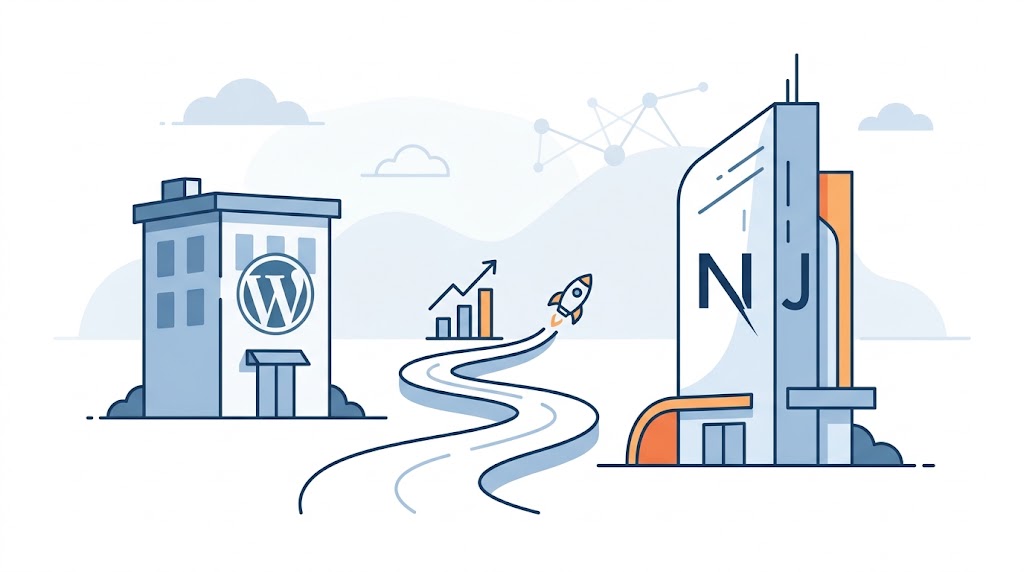
When a business ponders whether it should rebuild its website in Next.js, the honest answer is usually no. Occasionally, though, it is one of the most profitable technical decisions that such a company could take. The difference comes down to two things: how fast the website feels to visitors, and how easily search engines can find and understand it.
Next.js is worth the investment when speed and search visibility directly affect revenue and WordPress can no longer deliver the control those goals require. For most other businesses, a well-built WordPress website remains the better choice.
WordPress can take a business a long way. It is flexible, relatively easy to manage, and capable of running everything from a small company website to a busy online store. The trouble begins when the website starts doing more than it was built for. It may have become the main source of customer enquiries, or the business may be publishing content across several regions and adding interactive features. At that point, a slow page or a poorly indexed service page is no longer a technical detail. It is a lost customer.
When does a website outgrow WordPress?
A website outgrows WordPress when keeping it running takes more effort than improving it. WordPress is popular for good reasons, since publishing is simple, the plugin library is huge, and skilled developers are easy to find. For a company website, a blog, or a standard online store, those strengths are hard to beat.
Trouble tends to appear as the business grows. The website may need to connect to a CRM, a booking system, and a customer portal, while also loading quickly for visitors in several countries. WordPress can handle much of this, usually by adding plugins, custom code, and outside services. Over time those layers pile up, a change to one feature can break another, and every update needs careful testing. This is rarely a fault in WordPress itself. More often, the business has simply moved past the job the website was originally built to do.
What is Next.js, in plain terms?
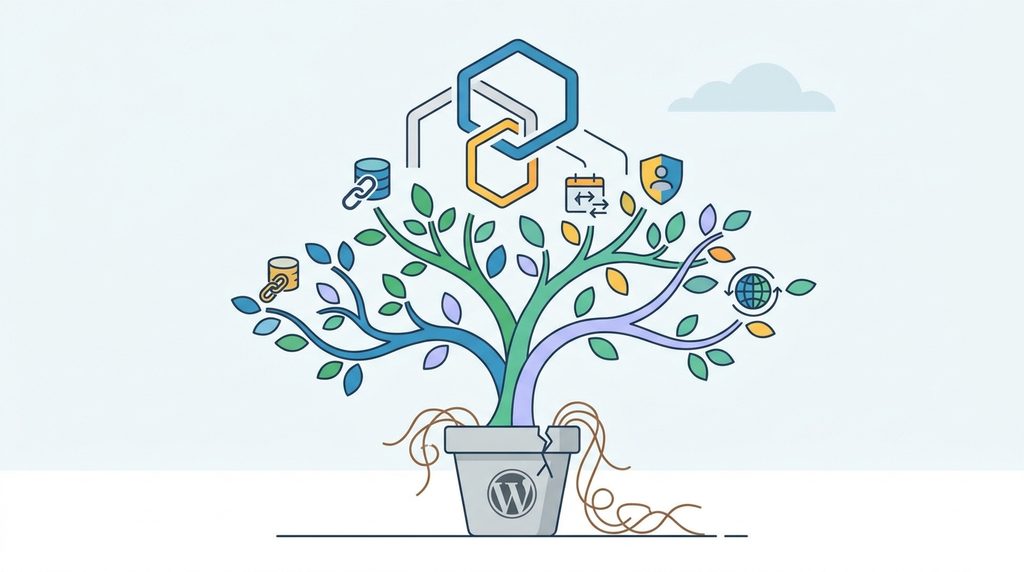
Next.js is a toolkit that developers use to build the part of a website that visitors see. While it is built on React, the important difference is how the website is put together. A typical WordPress site manages the content and displays the pages in one system. Next.js allows the two to be separated, an approach known as headless architecture.
Think of it as keeping the same filing system in the back office while rebuilding the reception area around it. Your team keeps writing in the WordPress dashboard they already know, while Next.js controls how pages load and behave. Alternatively, the whole website can be built in Next.js with content managed elsewhere. Either way, the payoff shows up in two places, which are how fast the site feels and how easily search engines understand it.
Does Next.js make a website faster?
It can, because it lets developers prepare pages before visitors ask for them. Service pages and landing pages that rarely change can be built in advance and appear almost instantly. Pages with current or personal information are built on request, and individual pages can be refreshed in the background without rebuilding the whole site. Meanwhile, images and code are loaded only when a page needs them, which trims the weight further.
That said, the framework alone guarantees nothing. Oversized images, extra scripts, and slow third-party tools hold back any platform, and a well-optimised WordPress site can be very fast. Next.js offers more control, and the quality of the development decides how well that control is used. Our guide to website optimization covers fixes that work on either platform.
Does Next.js help with Google rankings?
Not automatically, but it can make a website easier for search engines to read. Google can process modern JavaScript websites, yet pages that arrive with their content already in place are simpler for it to understand than pages that assemble themselves in the visitor’s browser. Next.js makes the first approach straightforward. It also gives developers direct control over page titles, descriptions, sitemaps, and redirects, along with the structured data that tells search engines and AI assistants what a page is about.
Likewise, it supports Google’s page experience measures, known as Core Web Vitals. These track how quickly a page loads, how quickly it responds to a click, and whether the layout jumps around while loading. Next.js provides tools to improve all three, although good scores still depend on careful execution. The real advantage is extra control over what loads and when, which matters most in markets where every ranking position counts.
WordPress, Next.js, or both?
WordPress is a content management system, while Next.js is a framework for building the website itself, so the two are not direct equivalents. In a rebuild, the practical differences look like this.
| Area | WordPress | Next.js |
| Content management | Built in | Needs a separate CMS or custom solution |
| Speed and performance | Depends on hosting, plugins, and optimisation | Greater control over how pages are delivered |
| Integrations | Plugins and APIs | Custom connections to business systems |
| Maintenance | CMS, plugins, themes, and hosting | Framework, dependencies, hosting, and code |
Many businesses settle on a middle path, which is headless WordPress with a Next.js front end. It suits companies with large content libraries, audiences in several countries, or complex integrations, and our article on headless CMS explains the model in more depth. However, previews, redirects, and logins all need proper setup, and the build costs more than a conventional WordPress site. For a small website with a handful of pages, that extra effort rarely pays off.
When is Next.js worth the extra cost?
It tends to earn its cost when the website is a major source of enquiries, so that small gains in speed and visibility turn into revenue. It also fits when the business is building a customer dashboard or software product, which calls for custom web application development, or when several systems such as a CRM, booking platform, and payment gateway must work together. Likewise, companies serving multiple markets with different languages and pricing benefit from the added flexibility, as do those whose every new feature now needs a workaround.
Cost deserves an honest look. A Next.js build usually needs more specialised developers, and hosting, monitoring, and updates add to ongoing expenses. On the other hand, a website that needs constant fixes carries its own price. Moving only because Next.js is fashionable is rarely a good investment, and better hosting, fewer plugins, and image optimisation sometimes deliver more than a rebuild. This is why our WordPress development work often starts with improving what a client already has, while a custom React development project makes sense once the requirements clearly call for it.
At Web Experts Nepal, we work with WordPress, React, Next.js, and custom web application development, so our advice follows your requirements rather than a preferred tool. If your website is struggling to keep up with your business, get in touch and we will help you decide what a different approach could offer.
Contact UsFrequently asked questions
- Can Next.js work with WordPress?
Yes. WordPress can manage the content while Next.js displays it, so editors keep the familiar dashboard. - Do I have to rebuild everything at once?
No. Some businesses start with their most important pages, such as services or landing pages, and move the rest over time. This spreads the cost and lowers the risk. - Will my team still be able to update the website themselves?
Yes, provided the project includes a content system suited to them. With headless WordPress, they keep the dashboard they already use, and with other systems. - Can I run an online store with Next.js?
Yes. A store can be built on Next.js with a separate commerce system behind it, although this costs more than a standard WooCommerce setup. For a straightforward store, WooCommerce is often the more practical choice.
Related resources.

Legacy Website Modernization Guide: How to Upgrade Without Starting From Scratch
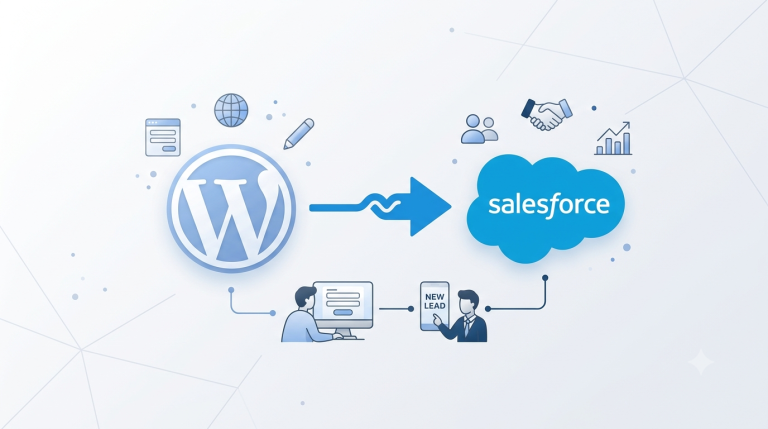
Salesforce and WordPress Integration: Connecting Your Website and CRM Without Creating More Work
WooCommerce vs Shopify: Which Platform Is Right for Your Business?
Have an idea worth building?
Share your concept with us and we’ll help you shape the right approach.