

Here is the question every founder eventually asks: “So, how long is this actually going to take?”
The honest answer is that it depends, but not on the thing most people assume. React itself is fast; it is after all a tool developers use to build the screens and buttons users click on, and it does that job well. The real variable is everything around it: how clear your idea is on day one, how much backend work hides underneath the surface, how thoroughly the thing gets tested, and how well the team stays organised. Get those right, and a project moves quickly. Get them wrong, and even the simplest app can drag on for months.
For a business leader planning a launch date or a budget, that difference is the whole game: a deadline you can hit versus one you spend the next six months apologising for.
Typical timelines by project type
| Type of application | Estimated timeline | Examples |
|---|---|---|
| Simple website or prototype | 3 to 8 weeks | Marketing sites, interactive dashboards |
| MVP (a first, working version) | 6 to 12 weeks | Early-stage SaaS products, startup launches |
| Medium-complexity application | 3 to 6 months | Customer portals, marketplaces, business tools |
| Complex application | 6 to 12+ months | Enterprise platforms, large-scale SaaS products |
These ranges cover everything from planning to launch. A project with shifting scope, or one that plugs into several other systems, will land on the longer end, regardless of team size.
What actually happens during those weeks
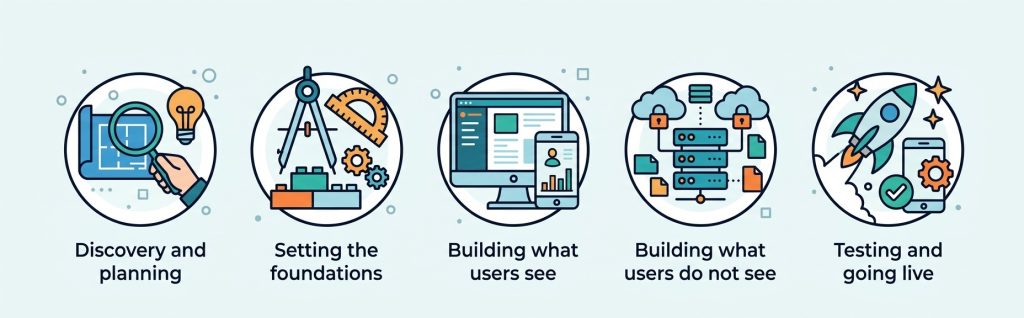
Every React project moves through roughly the same stages, though how long each takes can vary enormously.
Discovery and planning (one to three weeks). Before a single line of code is written, the team agrees on what the product does, who it is for, and what it needs to connect to. Rushing this step is the most common reason projects run late, since an unclear idea almost always becomes an expensive rewrite later.
Setting the foundations (one to two weeks). Think of this as pouring concrete before building a house. Developers choose their tools and decide how the visible part of the app talks to the systems behind the scenes. Get this wrong and every future feature gets harder to build.
Building what users see (four to sixteen-plus weeks). Usually the biggest chunk of the timeline, this covers the buttons, forms, menus, and dashboards people interact with. A simple app with a couple of screens might come together in weeks. A platform juggling multiple user types, live data, and paid subscriptions can take several months, since every piece needs to work smoothly together.
Building what users do not see (two to twelve-plus weeks). React handles the front of the shop, but almost every app also needs a back office: somewhere to store data, verify logins, process payments, and talk to outside tools such as a CRM. If that back office already exists, things move fast. If it needs building from nothing, add real time.
Testing and going live (three to nine weeks combined). Before launch, the app gets checked across devices and real-world scenarios, and security gets a final look. Shortcuts here tend to reappear later as bugs and emergency fixes, which cost more time than doing it properly the first time. Once live, the app typically needs ongoing care and small improvements based on how people actually use it.
What really moves the needle on speed
A few things explain most of the gap between a six-week build and a nine-month one, and none of them are really about React.
How complicated the idea is comes first. Multiple types of users, live updates, or automated processes add layers of planning and testing. Popular features such as logins, payments, search, or built-in AI tools sound simple but take real time to build, so deciding what genuinely needs to exist on day one, versus what can wait, is worth doing early.
Whether the back office already exists matters just as much. If the systems for storing data and managing users are built and stable, the visible part of the app moves quickly; if it all needs creating from scratch, expect the timeline to stretch. The same logic applies to design, since flashy animations and data-heavy screens take longer to build and test than a clean, simple interface.
Finally, and this one surprises people, team experience tends to matter more than team size. A small, well-run team that has done this before will often finish faster than a larger team still figuring things out, simply because it spots problems before they become expensive.
Building faster without cutting corners
Speed does not have to mean skipping steps. It usually just means planning better, and most delays are avoidable once you know where they come from.
Starting small is almost always the smartest move. Rather than building every feature at once, launch with what users need most and build the rest from there. Locking in what the app needs to do before development starts matters just as much, since changing your mind halfway through a build is one of the biggest causes of delay, right alongside thin initial planning and slow stakeholder feedback. An experienced development partner tends to catch these risks before they turn expensive.
MVP versus the full product
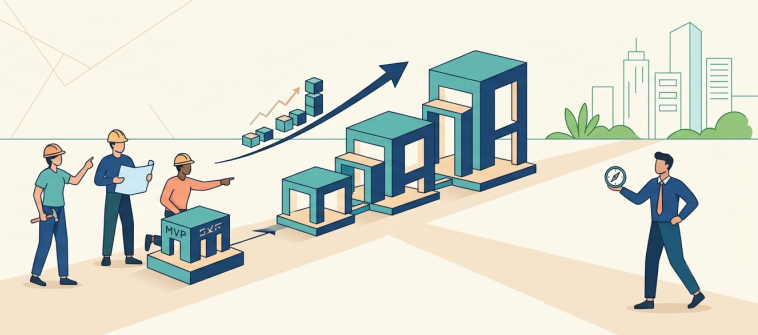
An MVP, built in roughly six to twelve weeks, covers the essentials: core user experience, working functionality, and a foundation solid enough to launch on. It exists to test whether the idea works before spending more money on it. A full product usually takes four to twelve months or longer, since it needs to support more types of users, deeper integrations, and enough performance to handle real growth. The right choice depends less on preference than on budget, launch pressure, and how confident you already are in the idea.
What it costs
| Application type | Estimated cost range |
|---|---|
| Simple application | $5,000 to $20,000 |
| MVP | $15,000 to $50,000 |
| Medium-complexity application | $50,000 to $150,000 |
| Enterprise-level platform | $150,000+ |
Cost tracks the same factors as timeline: feature count, back-office work, and how thoroughly it all gets tested. A clearly defined project is far easier, and cheaper, to estimate.
Working with Web Experts Nepal
Building a React application well takes more than writing code that works. It means planning something that can grow, connecting the right systems, and preparing for what comes after launch, not just launch day. At Web Experts Nepal, our team has delivered everything from six-week MVPs to multi-month enterprise platforms, working directly with founders to map out a realistic plan before development begins.
Our services include custom application builds, MVP development, React and Next.js solutions, integrations, performance tuning, and ongoing support. Whether testing a new idea or upgrading something existing, we can help map out a timeline that fits your goals and budget.
Frequently asked questions
- How long does it take to build a React application? Most MVPs take six to twelve weeks, while larger platforms take several months, depending on complexity and testing needs.
- Is React faster to develop than other frameworks? Its reusable building blocks can speed things up, but the timeline depends far more on project complexity than on the framework chosen.
- How much ongoing maintenance does a React application need? Most apps need regular updates and small performance improvements after launch, depending on size and usage.
- Should I build a React application or a standard website? A React application suits interactive platforms and SaaS products, while a traditional website usually fits simpler, content-focused needs better.
The bottom line
How long a React application takes comes down to what you are building, not the technology doing the building. A simple MVP can be ready within a couple of months; a complex, multi-role platform will reasonably take longer, and that is fine, as long as you know it going in. Clear planning, realistic scoping, and a team that has done this before are what separate a project that ships on time from one that quietly slips for months.
Contact UsRelated resources.

How to Scale a WooCommerce Store Without Breaking Performance

Website KPIs That Actually Matter

What Makes a WordPress Website Sustainable Long-Term?
Have an idea worth building?
Share your concept with us and we’ll help you shape the right approach.